
Theory-Driven Strategies for Faster, Smarter Launches
In today’s fast-paced markets, the ability to bring a product from concept to shelf quickly is a significant competitive advantage. Yet, speeding up the timeline often risks compromising quality, performance, or user experience. The key is not to work faster, but to work smarter—through structured product and design engineering practices grounded in proven theory.
Here are five theory-based best practices that reduce time to market without sacrificing product integrity.
1. Apply Concurrent Engineering (CE) Principles
Theory
Concurrent Engineering encourages parallel workflows instead of sequential stages. Design, engineering, sourcing, and manufacturing planning happen simultaneously rather than step-by-step.
Application
Involve suppliers and manufacturing teams early in the design phase. Address tooling constraints, material availability, and production methods upfront. This avoids late-stage redesigns and accelerates hand-offs between departments.
2. Design for Manufacturability (DFM)
Theory
DFM is an engineering discipline focused on simplifying product designs to ease production without affecting functionality or quality.
Application
Optimize part count, avoid complex geometries, and design with standard materials and tolerances. Use proven production methods instead of untested techniques. By reducing production complexity, DFM lowers the risk of delays during prototyping and scale-up.
3. Use Modular Design Thinking
Theory
Modular product architecture breaks down a product into standardized, interchangeable components. This reduces complexity and increases flexibility in development.
Application
Design systems where core components remain stable across product variants. For example, create a universal mounting base with swappable tops or functions. This allows parallel development of modules and simplifies revisions, reducing lead time for custom variations.
4. Leverage Rapid Prototyping and Simulation
Theory
The “fail fast, learn fast” model in agile development promotes early testing and iteration. Virtual simulation and rapid prototyping accelerate learning loops.
Application
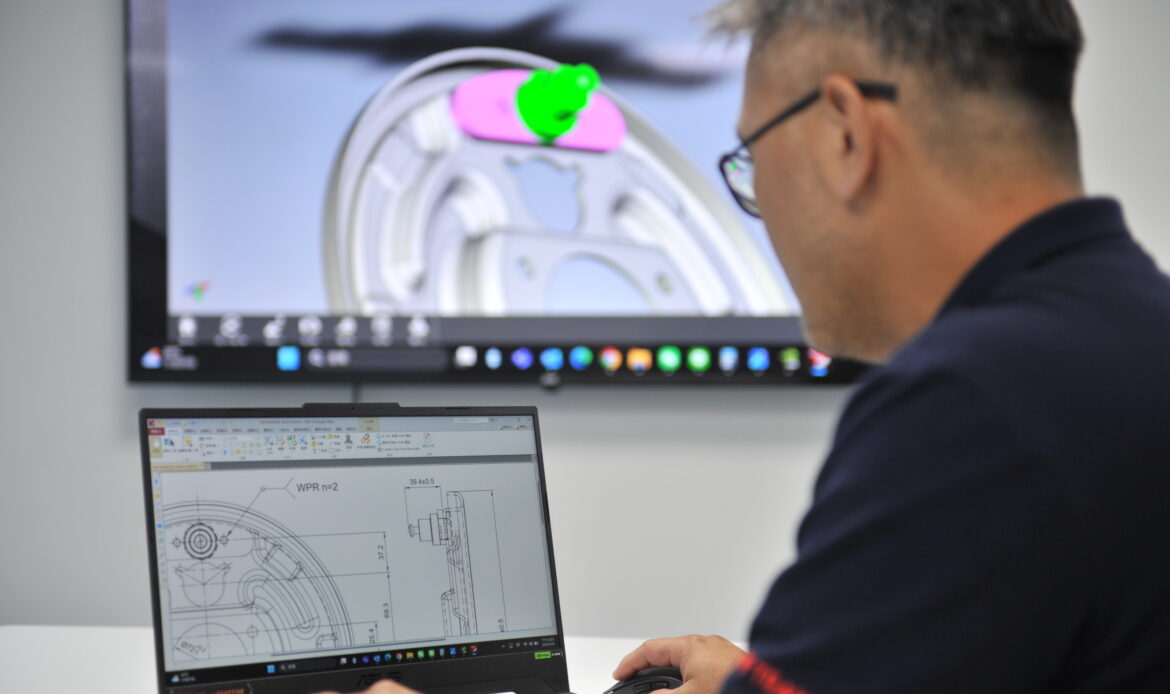
Use CAD-based simulations (FEA, CFD, etc.) to validate concepts before physical builds. Combine 3D printing or CNC samples with quick functional testing. This shortens the time needed to identify flaws and improves design decisions early in the cycle.
5. Implement Clear Phase-Gate Development
Theory
A phase-gate model divides product development into defined stages (concept, design, prototype, pilot, production), each with criteria to be met before moving forward.
Application
Use gates as control points to review readiness and prevent scope creep. Define go/no-go decisions based on test results, cost targets, and manufacturing alignment. This adds discipline, limits rework, and aligns cross-functional teams.
Conclusion
Reducing time to market isn’t about rushing. It’s about using structured, theory-based practices that eliminate waste, reduce risk, and enable faster, smarter decisions. By applying concurrent engineering, DFM, modularity, rapid validation, and a clear phase-gate process, product and design teams can accelerate development while maintaining quality—and get to market ahead of the competition.